
Can Technology Reduce Your Guard Costs Without Sacrificing Security?
- Key C. Powell

- 2 days ago
- 4 min read

For many community associations, guard services represent one of the largest recurring expenses in the annual budget. A staffed gate provides a visible security presence, but it also comes with significant challenges: rising labor costs, staffing shortages, overtime, turnover, and the constant challenge of filling overnight and weekend shifts.
The good news? Modern technology now allows many communities to maintain security while significantly reducing guard expenses.
The question is no longer whether technology can help. The question is how much of your current guard workload actually requires a person.
The Most Expensive Hours Are Often the Least Busy
Many gated communities experience predictable traffic patterns. The busiest periods are typically mornings, afternoons, and early evenings. By contrast, overnight hours and Sundays often have very little visitor activity.
Unfortunately, staffing costs don't decrease when traffic slows down.
Many associations are finding success by supplementing guard services with technology during these low-traffic periods. Rather than eliminating guards entirely, they strategically reduce coverage during hours when technology can effectively handle most visitor interactions.
For example, some communities maintain a staffed gate during peak hours but transition to a telephone entry system, virtual guard service, or remote monitoring overnight.
The result is often substantial annual savings while maintaining a secure entry process.
Digital Guest Passes Reduce Workload
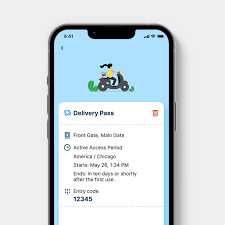
One of the biggest advances in community access control is the use of digital guest passes.
Rather than requiring every visitor to stop at the gate and interact with a guard, homeowners can issue guest passes directly from their smartphone.
Visitors receive a text message, email, QR code, or digital credential that allows them to enter the property without stopping.
This provides several benefits:
Faster visitor processing
Shorter lines at the gate
Reduced workload for guards
Better tracking and reporting
Improved resident satisfaction
Perhaps most importantly, digital guest passes allow residents to manage their own guests rather than relying on gate staff to verify every visitor.
For communities with large numbers of deliveries, contractors, family members, and recurring guests, this can dramatically reduce operational costs.
The Advantages of Virtual Guards
Virtual guard services have become increasingly popular in recent years.
Using cameras, microphones, speakers, and access control systems, a remote guard can monitor and manage entry points from a centralized location.
Virtual guards offer several advantages:
No late arrivals
No call-outs
No shift coverage issues
Consistent policy enforcement
Detailed documentation of interactions
Lower operating costs
A virtual guard can verify visitors, communicate through intercom systems, review access credentials, and open gates when appropriate.
Many associations find that virtual guards are particularly effective during overnight hours when traffic volume is low but security remains important.
Enter the AI Guard
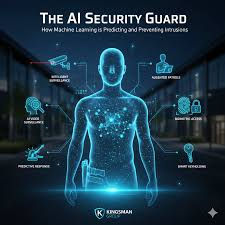
The next evolution of gate security is already arriving.
AI-powered guards combine cameras, microphones, speakers, access control systems, and artificial intelligence to create a digital gate attendant capable of interacting with visitors in real time.
Unlike traditional telephone entry systems, AI guards can carry on conversations, answer questions, and guide visitors through the entry process.
Some advantages include:
24/7 availability
Consistent rule enforcement
No fatigue or distractions
Instant access to community policies
Multi-language communication
Lower operating costs
AI guards can often communicate with visitors and homeowners in multiple languages, helping eliminate communication barriers that sometimes occur at gatehouses.
For many communities, this technology offers an exciting glimpse into the future.
The Current Limitations of AI
While AI has made tremendous progress, it is not perfect.
Complex accents, unusual visitor requests, poor audio quality, and unreliable internet connections can occasionally create challenges.
For this reason, many security professionals currently recommend a hybrid approach.
In this model, the AI system handles the majority of visitor interactions. If the AI encounters a situation it cannot confidently resolve, the interaction is seamlessly transferred to a live remote guard.
This approach provides the best of both worlds.
The AI handles routine traffic quickly and efficiently, while a trained human remains available to resolve exceptions.
Because the AI still manages most interactions, communities can achieve significant savings compared to fully staffed gatehouses.
Finding the Right Balance

The goal is not necessarily to eliminate guards.
The goal is to use technology where it makes sense and reserve human resources for situations where they provide the most value.
For some communities, that may mean replacing overnight shifts with virtual guards.
For others, it may mean using digital guest passes to reduce gate traffic.
For larger communities, it may eventually mean combining AI, virtual guards, and on-site personnel into a single integrated solution.
Every community is different. Traffic patterns, resident expectations, security concerns, and budgets all play a role.
What remains constant is the desire for something every board, manager, and homeowner values:
Peace of Mind.
Technology is making that peace of mind more affordable, more reliable, and more accessible than ever before.


Comments